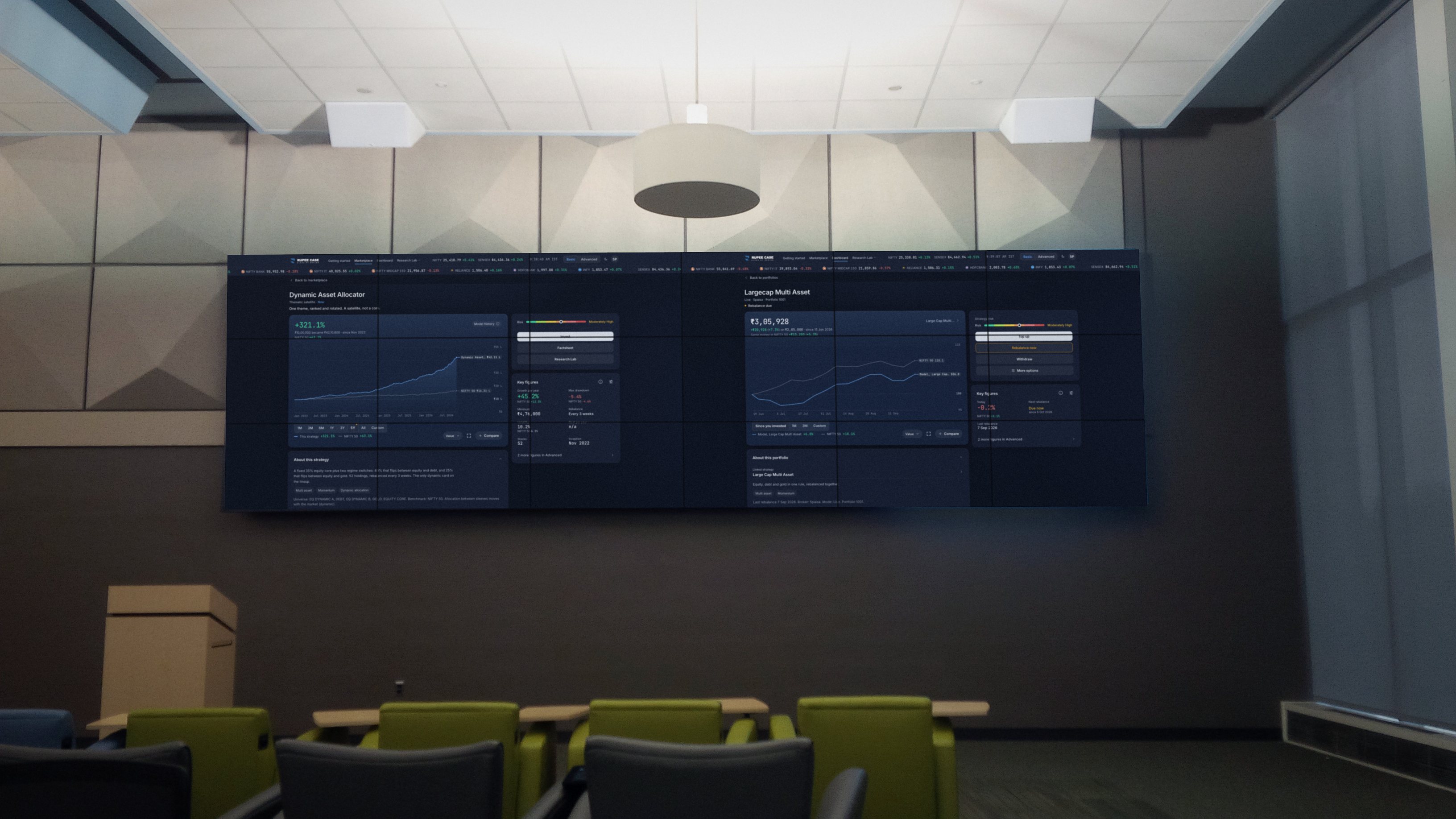
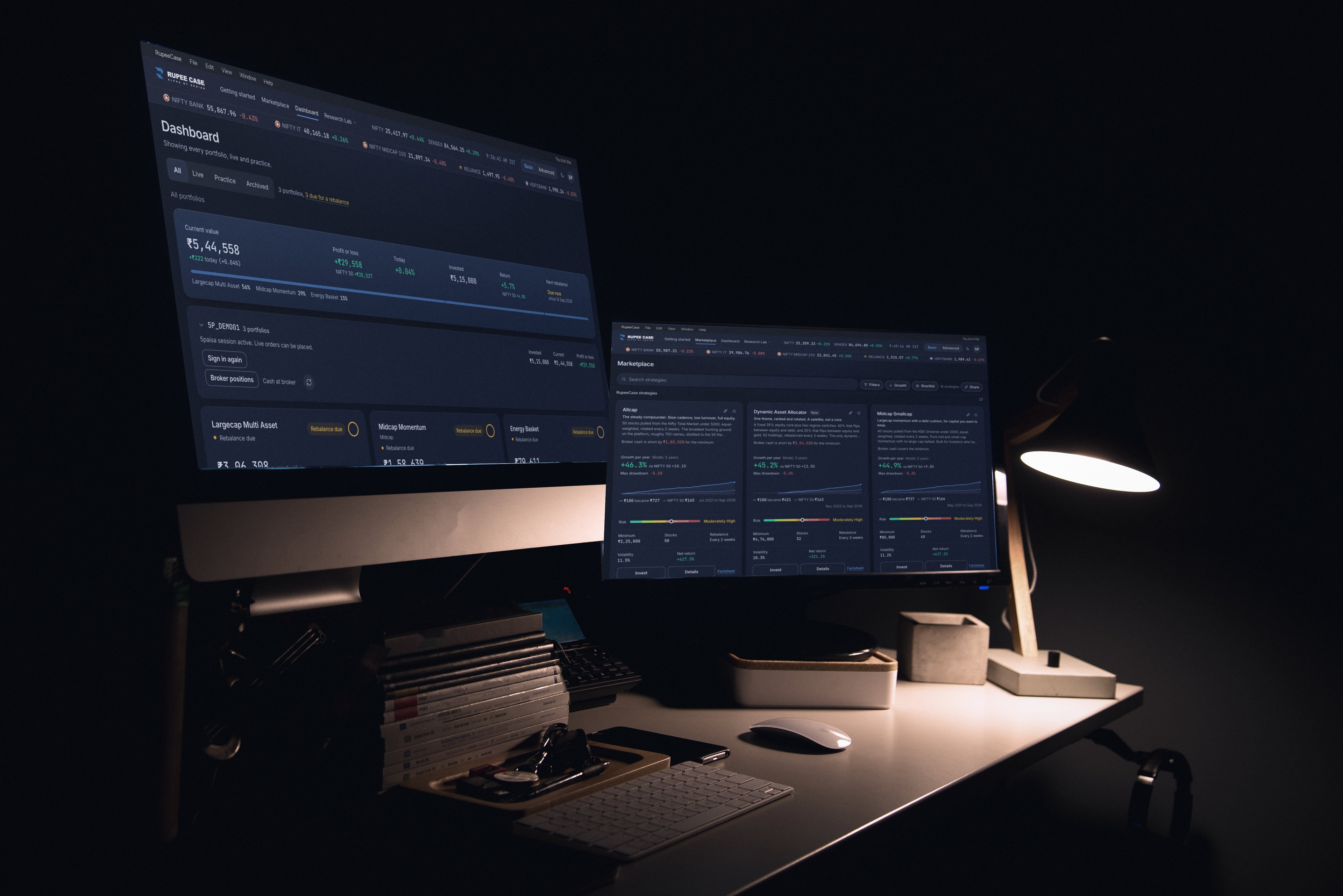
Model, back tested. As of 27 Apr 2026. After charges. Not a promise of future returns.
Move to zoom in
01Find yours
Pick a type. Then a risk band.
Each card shows three numbers: model CAGR, the deepest model fall and the minimum to start. Tap a card for the full factsheet. Model, back tested. As of 27 Apr 2026. After charges, not a promise of future returns.
01Return against riskModel CAGR against the deepest model drawdown, every strategy.
02What it takes to startMinimum capital, lowest to highest. It moves with prices.
03How often it tradesEvery strategy rebalances on a fixed calendar.
Risk and returnModel, back tested
Higher is more return. Further right is a deeper fall.
Model, back tested. As of 27 Apr 2026. Colour shows the risk band. Not a promise of future returns.
Minimum capitalApproximate
Start from ₹22K.
One share of every holding at recent prices; it moves with the market. Colour shows the risk band.
Rebalance calendarFixed dates
Rules run on a calendar, not on a hunch.
0.2% of traded value per rebalance. No subscription, no AUM fee.
03Rebalances
In, out, held. On the date.
Every rebalance of every strategy is published. Two of them, replayed from the record.
Reviews
4,752 and growing. 51 of 59 five star.
Real feedback from Google reviews, the WhatsApp community and Apple Podcasts, in their own words.
04Questions
Quantitative indices, in plain words.
How many strategies does RupeeCase have?
18, each a rules based index algo on NSE: 8 momentum, 4 multi asset, 3 hybrid, 2 thematic and 1 equal weight. Model CAGR runs from 15.2% to 54.1% (model, back tested, as of 27 Apr 2026) and minimum capital from about ₹22,000. Every strategy has its own page with a full factsheet.
What is a quantitative index?
A quantitative index picks and weights its stocks by fixed rules written in advance, such as momentum or quality, instead of by company size. An algorithm applies the rules and rebalances on a set schedule, so nobody decides by feel.
How is a RupeeCase index different from the Nifty 50?
The Nifty 50 holds the 50 largest companies weighted by market size. A RupeeCase index picks and weights stocks by fixed rules such as momentum instead. Each is measured against the Nifty 50 in a rolling five year back test (since inception where the record is shorter) with costs deducted. Back tests are not live performance and not a guarantee.
Do I own the stocks in a RupeeCase index?
Yes. The stocks sit in your own demat account with your own broker, and RupeeCase sends the orders the rules generate. RupeeCase is a technology platform, not a fund or PMS, and is not a SEBI registered investment adviser or portfolio manager.
What does a RupeeCase index cost?
0.2% of traded value per rebalance, charged only when trades execute. There is no subscription, no AUM fee, no performance fee and no lock in. Minimum capital starts at about ₹22,000, depending on the index.
How often does a RupeeCase index rebalance?
On a fixed schedule set by its rules, and the schedule is published. Across the lineup it runs from every week to every 4 weeks, depending on the index. Every rebalance is written to a public log.