RupeeCase | Systematic Quantitative Investing Terminal by QC AlphaRupeeCase | Systematic Quantitative Investing Terminal by QC Alpha
Start free
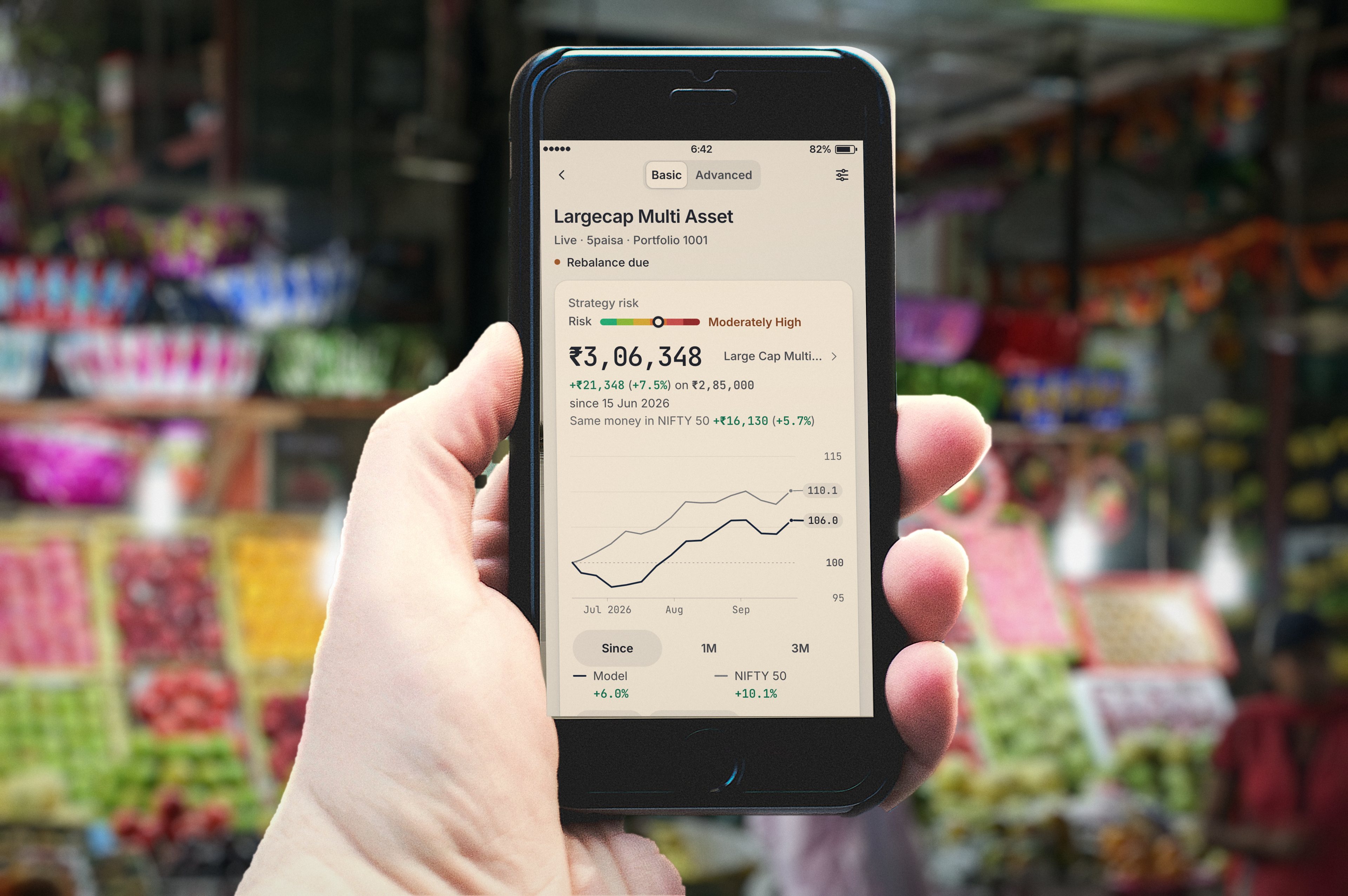
Hands hold a phone showing a RupeeCase strategy chart beside a glass of cutting chai on a sunlit ledge

India's first systematic investing terminal

Four steps.
About 11 minutes.

Compare first, validate the back test, then invest. Your broker account stays yours, and RupeeCase never holds your money.

  • ~11 minsign up to invested
  • Your brokerholds the money and shares
  • 0.2%one fee per rebalance, like brokerage
Sign up for RupeeCase
A hand holds a phone showing a RupeeCase sample portfolio in front of a fruit stall at Crawford Market, Mumbai

01Account and broker

Your demat.
Your broker.

Sign up with your email, then link the broker account you already have. Your shares, your DP, your bank.

~4 minto connect 5paisa, Zebu or Arrow. RupeeCase never holds the money.

A single ray of light passes through a tilted glass slab and fans out into teal, blue and violet bands

02Rebalance and track

Then it
runs itself.

The rule reruns on its published cadence, the orders go to your broker, and every change is logged in public.

03The journey

Six steps.
The last two run themselves.

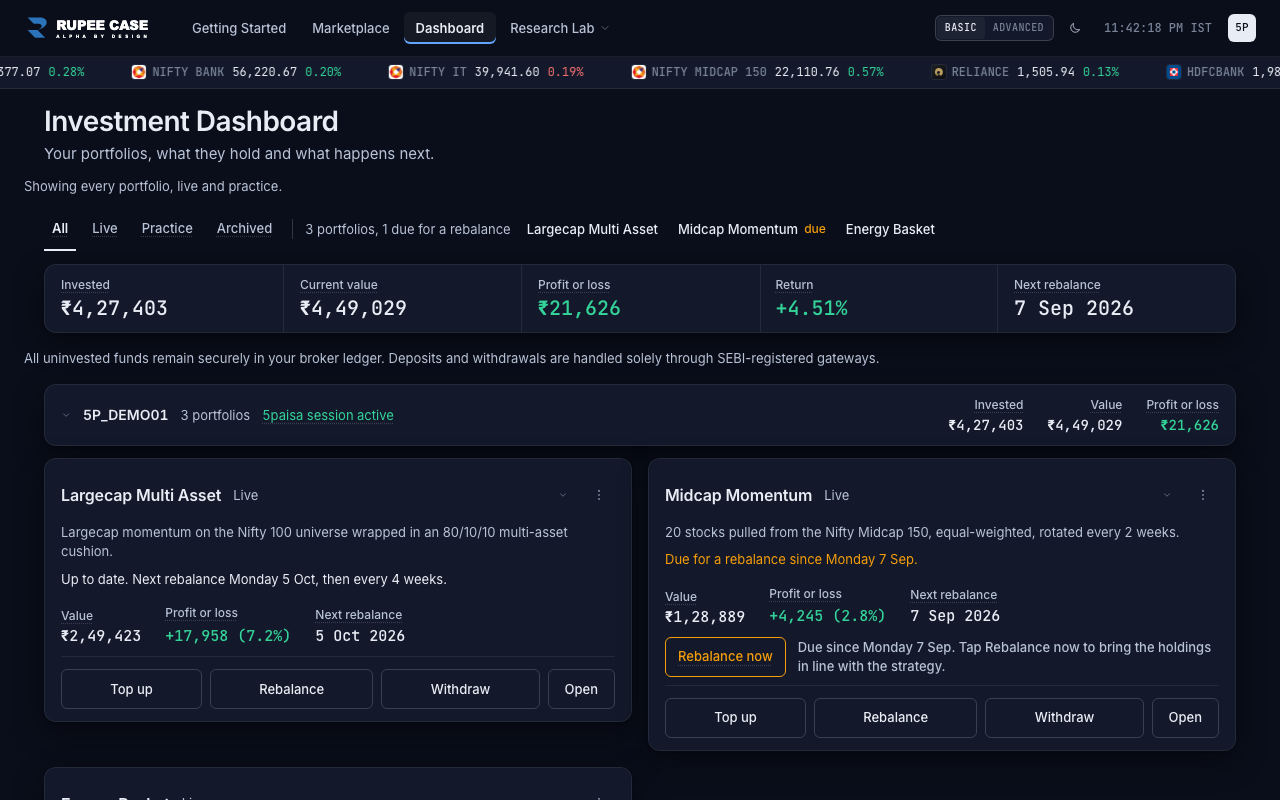
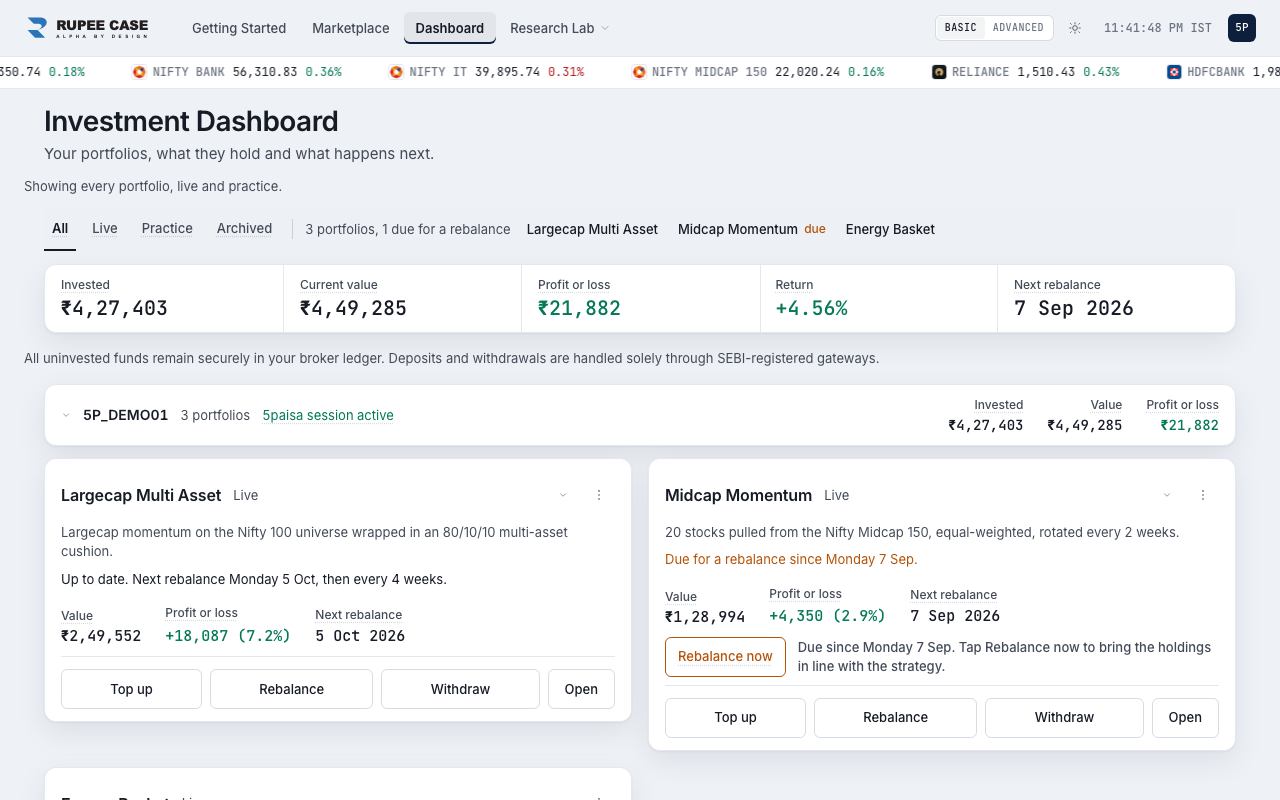
The RupeeCase dashboard with the broker session and cash at the top, sample dataThe RupeeCase dashboard with the broker session and cash at the top, sample data
01

Create your account

Sign up with your email. No card, no commitment. Browse every strategy, its rules and its full back test before you connect anything.

02

Connect your broker

5paisa, Zebu and Arrow are live today. Kotak Securities, Groww and Angel One are in integration. You link your existing demat inside the app.

  • 5paisa
  • Zebu
  • Arrow
  • Kotak Securities
  • Groww
  • Angel One
03

Compare, then validate the back test

Every strategy is an algo packaged like an index. Each publishes its universe, its selection rule, its rebalance cadence, its full back test with costs deducted and its comparison against the Nifty 50. Compare them side by side, read the losing periods, then choose.

04

Invest at or above the minimum

The holdings are whole shares at published weights, so the rule needs enough capital to hold all of them. Fund at or above that minimum and it goes live in your own account.

05

It rebalances

The rule reruns on the strategy's published cadence. When the ranking changes, the orders go to your broker, and every name in, out or retained is logged the same cycle.

06

Track it

Every share sits in your own demat with its weight and profit. Add capital, withdraw or pause whenever you want, subject to normal broker settlement.

  • Smart ledger
  • Order tracking
  • Portfolio analysis
  • Pledge for margin, via your broker

ComingF&O hedging, only ever as portfolio insurance. Not live yet.

04A rebalance day

Only what changes
is charged.

Replayed from the published record: the Energy Basket model rebalance of 24 April 2026. Three names went out, three came in, ten were held. The fee is 0.2% of the value traded, nothing on the rest. Then tap any name to change it yourself.

Names changed0 of 13
Value traded₹0
Fee, 0.2%₹0
Energy Basket rules

Illustration on ₹1,00,000 at equal weights. Tickers from the published model record, not actual client trades. Published worked example: 30% turnover on ₹1,00,000 is ₹30,000 traded and a ₹60 fee. If nothing trades, nothing is charged.

05Custody

Where the money sits.
Who presses confirm.

  1. 01Custody stays with your brokerRupeeCase places the orders the rule generates. It never takes the money or the shares.
  2. 02You approve, your broker executesThe real rebalance screen, on sample data.
CustodyYour shares, your DP, your bank

The money moves between you, your broker and the exchange. Never through us.

YouYOUR BANK Your brokerDEMAT, DP5PAISA, ZEBU, ARROW NSE, BSEEXCHANGE RupeeCaseORDERS ONLY MONEYORDERS, FILLS NO CUSTODYNO MONEY HELD ADD, WITHDRAW, PAUSENORMAL BROKER SETTLEMENT
  1. 01YouYour bank
  2. Money
  3. 02Your brokerDemat, DP: 5paisa, Zebu, Arrow
  4. Orders, fills
  5. 03NSE, BSEExchange
  6. 04RupeeCaseOrders only
  7. No custody, no money held
  8. Add, withdraw, pause: normal broker settlement
The productSample data

You approve. Your broker places the orders.

Reviews

4,752 and growing. 51 of 59 five star.

What people say after the first rebalance. From Google reviews, the WhatsApp community and Apple Podcasts.

07Questions

Common
questions.

How long does it take to get started?

About 11 minutes. The four steps take about 2, 4, 3 and 2 minutes: create your account, connect your broker, pick a strategy, then invest at or above its minimum.

What do I need?

An email address, a demat account with a supported broker, and money at or above the minimum of the strategy you pick. No card to sign up.

Can I start small?

Yes, as small as a strategy's minimum allows. Each one sets its own minimum, because the holdings are whole shares held at their published weights. Sort the lineup by minimum to find the lowest.

Is RupeeCase a broker?

No. RupeeCase is a technology platform, not a broker. Your own broker holds your money and the shares and executes the trades. RupeeCase places the orders the rule generates in your own account.

Can I use it without connecting a broker?

Yes. Every strategy is published with its full holdings and rebalance trail, so you can replicate it by hand at any broker. The connection only automates the workflow.

Do you recommend individual stocks?

No. RupeeCase is not a research analyst. The algorithm picks the names, not a human.

What does RupeeCase charge?

0.2% of traded value, charged only when a rebalance actually executes. No subscription, no AUM fee, no performance fee, no lock in. We do not take brokerage, spread, or payment for order flow. Pricing.

About 11 minutes from here

Own the strategy.
Keep your broker.

Research disclosure. RupeeCase strategies are research models, not personalised investment advice. Past performance does not indicate future returns. Read the disclaimers and terms before you fund a strategy.